
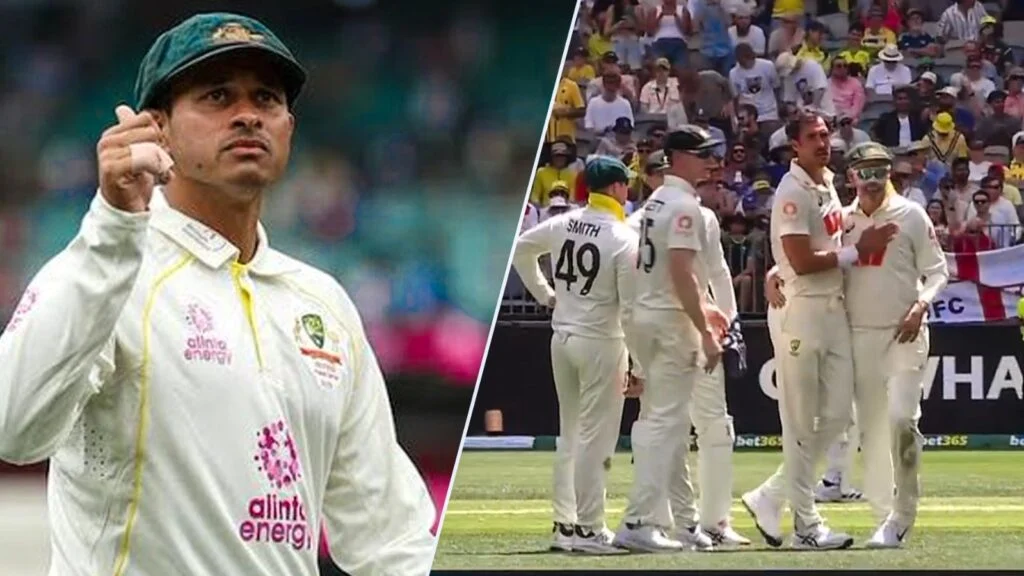
On Friday, November 21, the Perth Stadium was the venue for the first Ashes Test match which commenced. The hosts couldn’t have asked for a better opening as they managed to restrict the English team to a mere 172 runs in their first innings. With seven wickets to his name, Mitchell Starc was the man who did the most damage with the ball and played a huge part in the visitors’ downfall.
To make things worse, a strange incident occurred when Jake Weatherald who was making his debut as a batsman opened the innings together with Marnus Labuschagne after the first innings break. Usman Khawaja’s absence was rather conspicuous, and the fans were left wondering where the left-handed batsman was.
What made Usman Khawaja not to open the innings for Australia?
Khawaja, who is the regular opener for Australia, did not go to bat and this led to a stir on social media almost instantly. However, the latest updates explain why Khawaja was not at the crease.
For the ones who might not know, Usman was on the sidelines for a long period of the first innings and had to conform to ICC’s regulations which state that a player must wait on the field for the same duration that he was off before he can bowl or bat.
Therefore, when it was Australia’s turn to bat, Khawaja did not meet the ICC’s criteria to be the first batsman because he had been off the field for too long. Moreover, he is now counting his time to get to bat in Australia’s batting.
A report, interestingly, noted that the explanation for Khawaja leaving the field was categorized as ‘Toilet break and stretching.’ If we look at the ongoing match, then at the moment of writing this article, Australia are already down as the hosts are 1/0 and the newcomer went back without scoring in his first match.
Khawaja’s case; ICC rules
ICC rule: 24.2.3: if a player is away from the field for more than 8 minutes, the following limitations will apply to his future participation in the match: 24.2.3.2: The player shall not be allowed to bat in the match until his team’s batting innings has been in progress for playing time equal to the unexpired Penalty time carried forward from the previous innings. However, as soon as his side has lost five wickets in its batting innings, he may bat immediately. If any unexpired penalty time remains at the end of that batting innings, it is carried forward to the next and subsequent innings of the match.
Download the CricInformer app
Take CricInformer with you. Get our app for cricket news and updates on your phone.