Virat Kohli and Rohit Sharma are two legendary faces of world cricket, not just Indian cricket. Any discussion about the greatest batters in cricket history would be incomplete without their names. Yet, despite their performances, questions about their age and places in India’s ODI team keep returning.
The argument often shifts from their batting to whether they are taking opportunities away from younger players. Then comes another question: can they still deliver in the field?
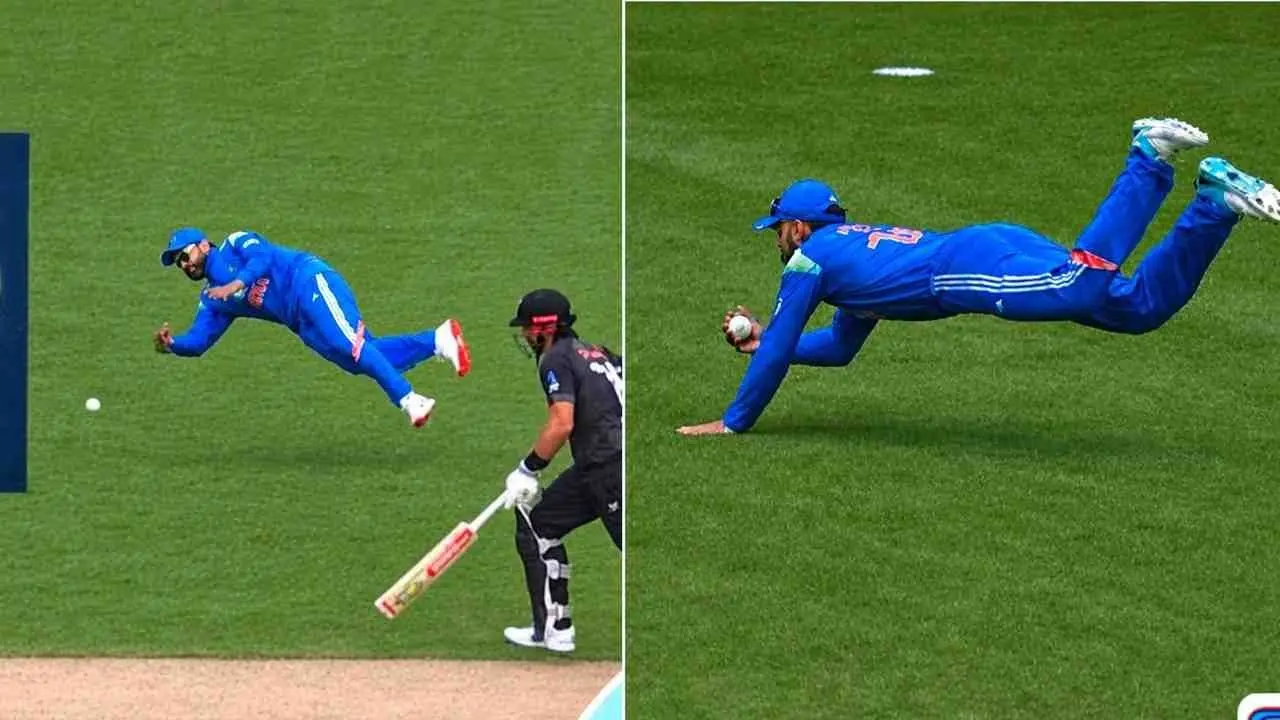
Against New Zealand in the first ODI at Eden Park in Auckland, both offered a convincing answer. Both went airborne during their efforts—Rohit to help run out Daryl Mitchell and Kohli to complete a stunning low catch to dismiss Nathan Smith.
Rohit and Kohli Have the Runs to Support Their Case
Their case for selection goes beyond reputation. Before this series, Rohit had scored 604 ODI runs in 2026 at an average of 50.33 and a strike rate of 104.67. Kohli had made 552 runs at an average of 69.00, striking at 117.94.
Those are strong returns from two players whose futures continue to attract debate. When experienced batters are producing those numbers, being over 35 should not itself become a reason to replace them.
Young players deserve opportunities, but selection must also recognise what the established players are contributing. In Auckland, that contribution extended beyond the bat.
An Airborne Rohit Removes a Dangerous Daryl Mitchell
Mitchell and Glenn Phillips were looking for a single when Phillips worked an Axar Patel delivery towards midwicket. Rohit immediately moved towards the ball, giving the batters little time to recover from their hesitation.
The impressive part was how quickly he combined the pickup and release. Rohit charged forward, gathered the ball and went airborne as he delivered an underarm throw towards KL Rahul at the striker’s end. Rahul removed the bails with Mitchell short of his crease.
Rohit did not wait to regain his balance before releasing the ball. He committed to the movement and kept the throw accurate while his body was in the air. That combination of urgency and control gave Rahul the chance to finish the dismissal.
A slower approach, a fumble or an extra moment before the throw could have allowed Mitchell to survive. Rohit turned a possible single into a wicket through his anticipation and execution.
Mitchell departed for 28, with the dismissal reported as the first run-out of his ODI career. His record explains why the breakthrough mattered so much: he entered the match averaging 74.10 against India, with four centuries in 11 innings.
Removing a batter with that record before he could build a substantial innings was a significant contribution from the 39-year-old.
Airborne Kohli Holds a Catch With Almost No Reaction Time
Kohli’s moment came when Nathan Smith edged Anshul Kamboj towards the slips. The ball travelled low to Kohli’s right and was dying on him, leaving almost no reaction time before it reached the ground.
Kohli responded instantly. He launched himself sideways, went airborne and reached down to take the ball just above the turf. This was no comfortable catch travelling towards him at waist height. He had to cover the distance to his right while getting his hand underneath a rapidly dropping ball.
The difficulty did not end when he reached it. Kohli also had to retain control as he landed. With the ball so close to the ground, even a slight delay in his movement could have turned the chance into a missed opportunity.
The catch was checked, with replays confirming that his fingers were underneath the ball. Smith was dismissed for one.
Kamboj had forced the mistake, and Kohli’s reflexes ensured the edge became a wicket. The speed of his reaction, full commitment to the dive and control through the landing made it an outstanding effort.
Youth Alone Does Not Guarantee Better Fielding
The contrast was noticeable because India had already missed a straightforward opportunity earlier in the innings. Naman Dhir dropped Tim Seifert off Auqib Nabi, giving the opener a reprieve.
India had also missed chances during the preceding T20I series. Those errors strengthen the argument that fielding standards cannot be judged by age alone. Anticipation, concentration, practice and execution all matter.

Rohit and Kohli demonstrated those qualities by putting their bodies fully into their efforts. Their experience was accompanied by the willingness to dive, react quickly and compete for every chance.
With the 2027 ODI World Cup approaching, India need players who contribute across a full game. Runs remain essential, but a sharp run-out or a difficult catch can also change an innings. Performances like these deserve a central place in any discussion about Rohit and Kohli’s future.