
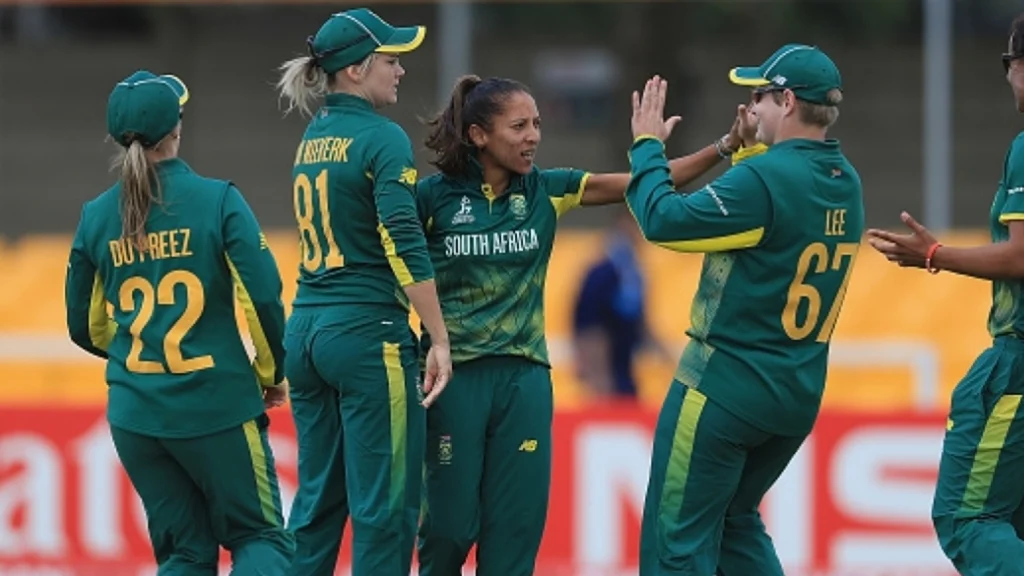
Cricket South Africa (CSA) has taken a monumental step towards gender equality in cricket by announcing equal international-match fees for both their men’s and women’s players. This progressive move aligns South Africa with countries like New Zealand and India, where gender parity in match fees is already established. The decision reflects a commitment to fostering inclusivity and recognizing women’s sports contributions.
The historic announcement coincides with another groundbreaking development: introducing a professional domestic system for women cricketers in South Africa. This move follows the success of hosting the Women’s T20 World Cup in February and demonstrates CSA’s dedication to nurturing the growth and advancement of women’s cricket.
The new domestic structure is based on the two-tier system with 16 teams. However, the top six teams will experience significant enhancements. They will be able to contract 11 players (up from six), receive pay rates equivalent to the highest-paid male cricketers in Division 2, and employ full-time coaching staff. CSA’s commitment to promoting gender diversity is evident, as they require two of the four subsidized backroom staff positions to be filled by females.
The top six teams will compete in both 50-over and 20-over formats, with matches potentially scheduled on the same days as the men’s competitions to maximize visibility. By professionalizing the women’s game at the domestic level, cricket becomes the first team sport in South Africa to take this transformative step. The country’s sports minister, Zizi Kodwa, commended CSA’s initiative, emphasizing the significance of leadership and political will in fostering such changes.
“What we are celebrating today is not monetary value but leadership and politics. In the first week of our appointment, we met with the country’s top five [sports] federations, and we stressed this point. You seem to be the only federation that understood what we said. How I wish others are listening as we speak now.” Kodwa said at the unveiling of the six teams in Pretoria.
“One minor injury, you will play IPL but not for India”: Kapil Dev’s Scathing Attack At Indian Star Player
This move brings about a much-needed boost for teams like Free State and Garden Route Badgers, which have not been as prominent in recent years. The expansion aims to elevate the sport and provide more opportunities for players across divisions to access elite-level international coaching and talent. CSA’s comprehensive plans include conducting camps for women’s teams with SA20 sides, introducing women’s exhibition matches in the SA20, and eventually establishing a women’s T20 franchise league.
The commitment to advancing women’s cricket comes at an estimated cost of R40 million (approximately US$2.1 million) over three years. The government has also lent its support to the initiative, with the Department of Sports, Arts, and Culture pledging R15 million (US$800,000) to CSA for the same period.
Overall, these developments mark a watershed moment in the history of South African cricket. The journey towards gender equality and recognition for women’s cricket is a financial commitment and a testament to the transformative power of sports in shaping societies and promoting inclusivity.
Download the CricInformer app
Take CricInformer with you. Get our app for cricket news and updates on your phone.