
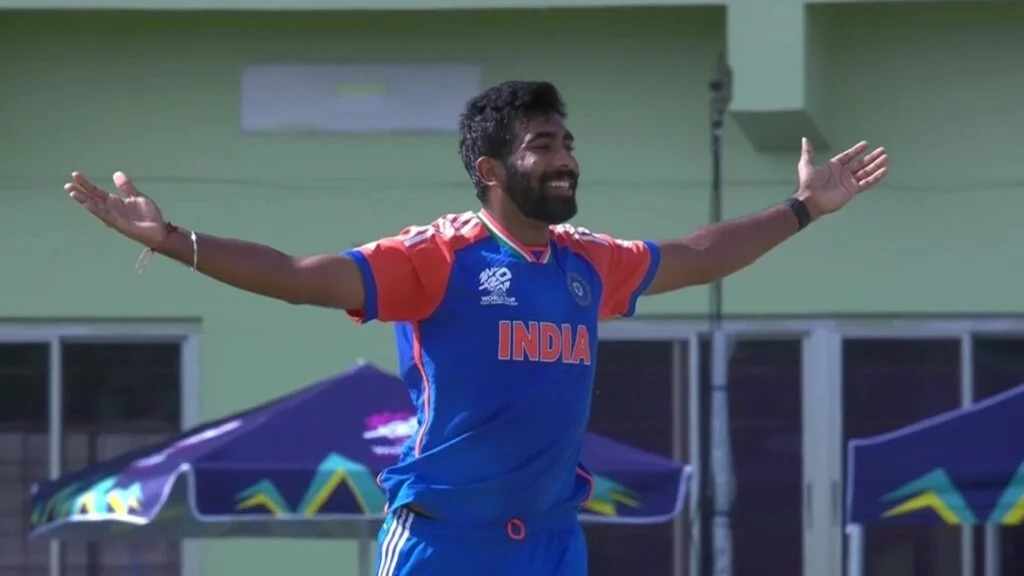
The Indian numerics-obsessed country, India, can’t seem to let go of this one number. 776 days. That is the time during which Jasprit Bumrah has not played any ODI for India.
In the meantime, India has played a lot of bilateral series, tried out a bunch of new fast bowlers and has been coping with 50-over cricket without their best actor in a very quiet way.
The current question is not about the reason for Bumrah’s rest. It is more about whether India is resting him too much or not.
When did Jasprit Bumrah last play an ODI?
Bumrah’s last ODI appearance was in the final of the 2023 ODI World Cup, a night which Indian cricket fans want to forget. The unbeaten India lost the final to Australia at Ahmedabad.
Jasprit Bumrah has a par of 43 in the bowling of which 9 overs, 2 wickets of Mitchell Marsh and Steve Smith were out to his name.
But, his spell wasn’t enough as Travis Head’s knock of 137 off 120 balls guided Australia to their fifth world title.
Bumrah disappeared from the 50-over format after that match. What followed was neither a sudden injury announcement nor a clear timeline.
Rather, it was a gradual drift into absence. Back problems came back. Workload issues became more noticeable. ODIs quietly disappeared from his calendar.
During this time Bumrah has made returns in Tests and T20s; he has bowled match-winning spells and has shown that when fit he is still counted among the fastest bowlers in the world. However, ODIs remain an untouched ground.
Why is India being so careful with Bumrah?
To interpret this caution correctly, one has to first comprehend Bumrah’s body. Fast bowling is unnatural. Besides, Bumrah’s action is even more so. The combination of his hyperextension, wrist position, and explosive run-up contributes the most to his pace and movement.
But at the same time, they cause the lower back to be under constant strain. And this is not just a theory but a history. India have already witnessed the consequences that result from overextending Jasprit Bumrah’s limits.
He has gone through stress fractures, long periods of inactivity, and hasty comebacks which almost brought about the end of his career. Now, the BCCI and the team management have resolved to make sure that this does not happen again.
Another reason is the calendar. IPL, Tests, T20Is, and overseas tours—India’s schedule has hardly any time for rest. In such a hectic situation, ODIs will be the first to go, especially with the next T20 World Cup in 2026 being nearer than the ODI World Cup in 2027.
From a medical point of view and also a strategic point of view, the reasoning is clear. But from a cricketing point of view, it opens a can of worms.
The downside of overprotection
The ODI bowling is not purely pace and skills. It is also about rhythm, endurance, and having a feel for the phases of a 50-over game. These are the instincts that vanish if not practiced regularly.
Jasprit Bumrah has not been through all that with the old ball, under scoreboard pressure, across long spells in over two years. T20 overs cannot do the same in any amount.
As India gradually approaches 2027, the risk gets transferred. The danger no longer lies in the injury alone, but is rust too.
Fast bowlers need match load more than just gym sessions and controlled returns. Without ODI game time, Bumrah’s comeback could feel less like a continuation and more like a restart.
Why were ODIs the format that got taken off? The choice also has something to do with the ranks. Tests are still the most revered. T20Is have value directly connected to World Cups and franchises.
On the other hand, ODIs, caught in the middle of the two, have turned out to be the compromise format, which is still important but can be easily put off as the team is too dependent on its star bowler for the other two formats.
Besides, India is sure that they can work on Bumrah’s ODI rhythm later. The problem is that when will it be too late?
What can be the next move for India regarding Jasprit Bumrah? There is a place in between the two extremes of exposing Jasprit Bumrah to the risk and putting him in a bubble.
After the 2026 T20 World Cup, the road map for him will have ODIs again. Not all series. Not meaningless fixture. But some select high-quality ODI series where his workload is supervised and the number of overs he bowls is limited.
India is not in need of Bumrah to bowl 10 overs in every match. What they require is his being available, confidence, and toughened when the 2027 World Cup comes.
Last word Jasprit Bumrah is not an ordinary fast bowler. He is a rare talent in a generation. It is a must that he is guarded. However, that does mean that he will have to be protected forever.
Resting for 776 days could have been beneficial for his physique. However, the Indian team has to make sure it wouldn’t affect their preparedness. For the time being, the spotlight can remain on the 2026 T20 World Cup. But, the ODI countdown has to begin again soon.
The reason being that great fast bowlers do not just require a break. They need to be in possession of the ball.
Download the CricInformer app
Take CricInformer with you. Get our app for cricket news and updates on your phone.